About Nørholm Vildmark
Across nearly 870 hectares of heathland, forests, bogs, and former agricultural land lie some of Denmark’s most valuable natural habitats.
Most of Nørholm Wilderness is protected under Natura 2000 and contain threatened habitat types and species – from otters and wolves to rare fungi and insects.
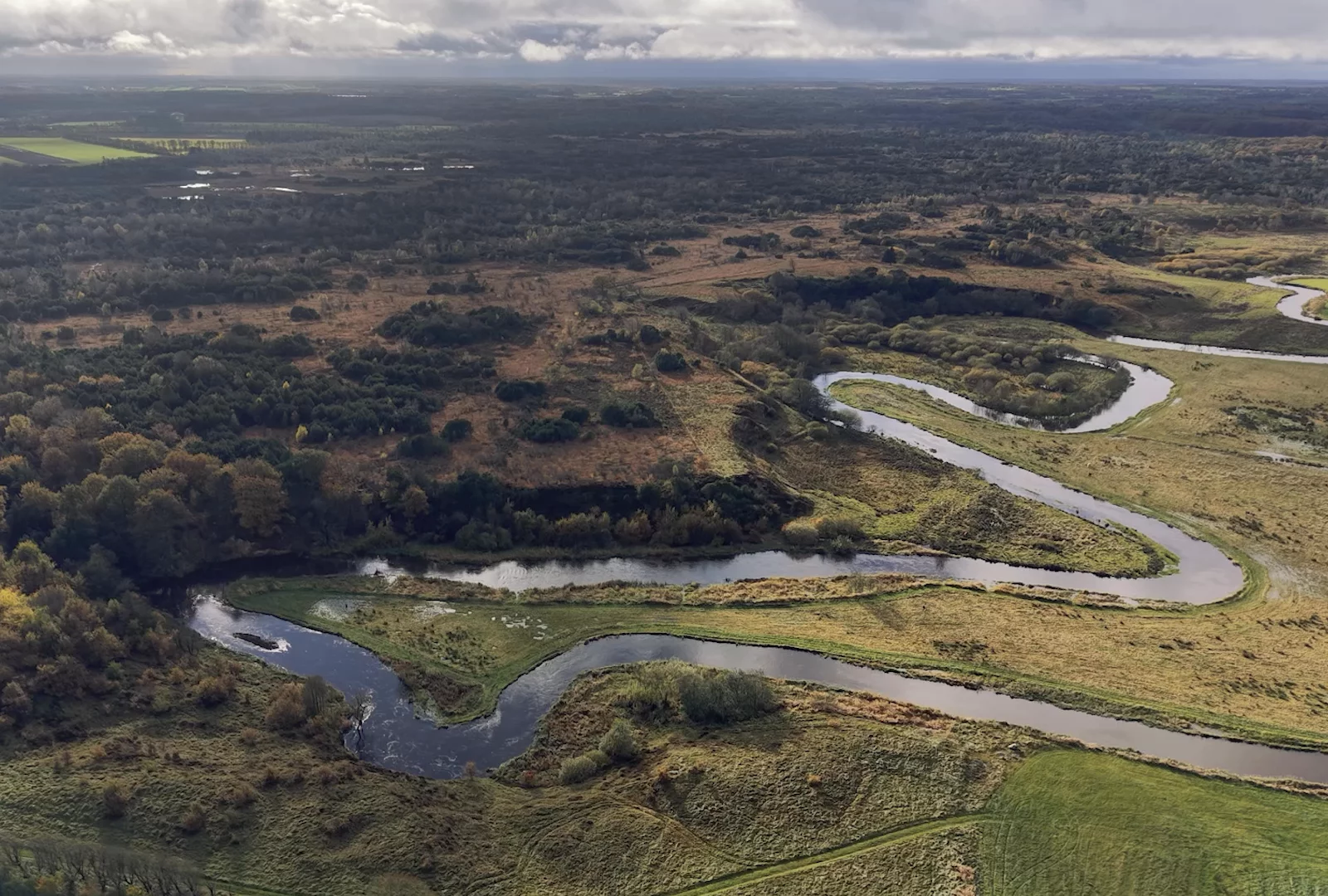
Here you will find both wet and dry heath, heath lakes, juniper scrub, inland dunes, bogs, and grassland, which together create a remarkable mosaic of habitats. The Varde River flows through the area, making Nørholm Wilderness a unique natural intersection for both animals and plants.
Going forward, we will support and strengthen the area’s vulnerable nature through year-round grazing and natural hydrology, to protect the area's variation in habitats and ecological conditions. We will create new opportunities for outreach, education, and research in rewilding.
Nature and Landscape
Heathland, forest, and wetlands along the Varde River
Nørholm contains some of Denmark’s most threatened habitat types: wet and dry heath, heath lakes, juniper scrub, bogs, grasslands, and inland dunes. Running through the area is the Varde River — one of Denmark's few true rivers — which provides habitat for a wide range of rare and threatened species.
Large parts of the area are designated as Natura 2000 sites to protect these rare habitats and the species associated with the river and heathland.
Nørholm Wilderness is home to more than 100 red-listed species, including:
- Otter, houting, freshwater pearl mussel, and green snaketail dragonfly in and around the Varde River
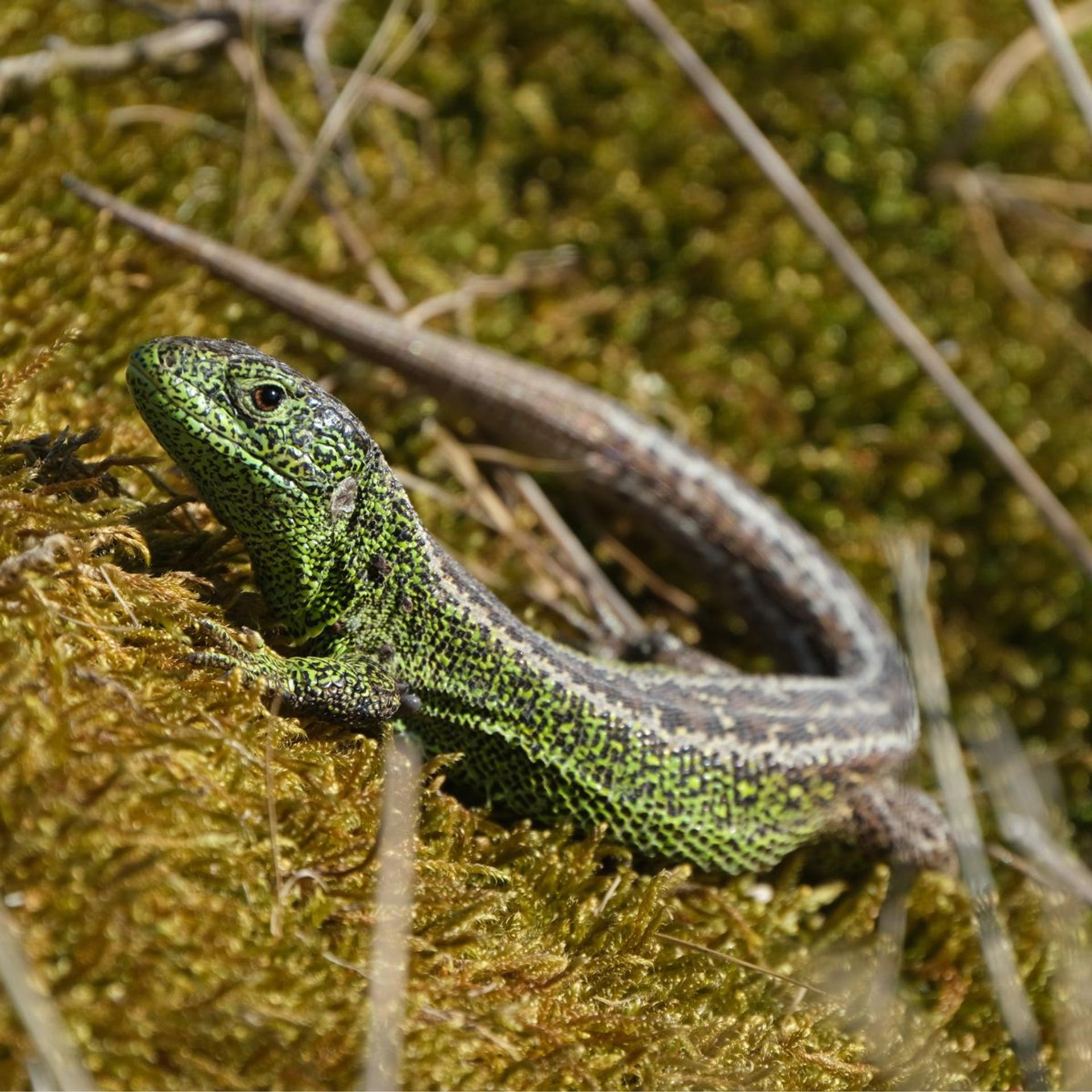
- Sand lizard, arnica, and globeflower in the dry heath and wet meadows
- 39 species of rare fungi and lichens in the forest and heath
The great variety of habitats makes the area one of Denmark’s most species-rich heathlands.
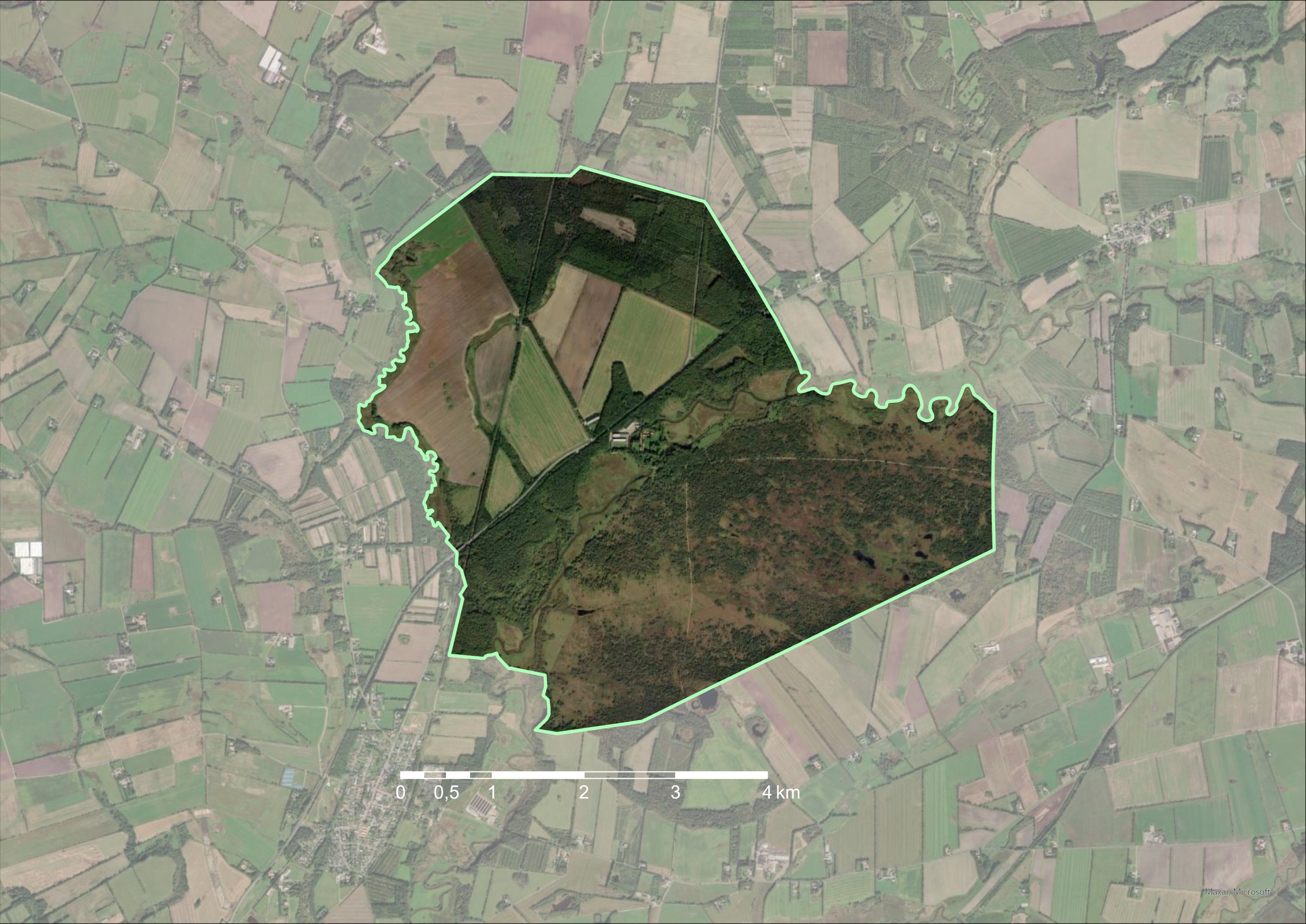
Nørholm Wilderness on the Map

The Hempel Foundation will take ownership of Nørholm Wilderness on 1 January 2026. Public access will follow the guidelines stated on signs in the area.
Dogs must be kept on a leash out of consideration for the wildlife.
Behind the Wilderness
We want to protect and restore Nørholm’s vulnerable nature and its unique natural variation
Nørholm Heath has been monitored by researchers since 1913 and is one of Denmark’s most thoroughly studied heathlands. This long research tradition on natural vegetation succession provides a unique basis for examining how the landscape responds when natural processes are restored.
Nørholm Wilderness will continue to be a place where new insights are developed and used to understand how nature can be restored in similar landscapes across Denmark.
Researchers and students will therefore be able to study which methods best support the area’s unique diversity and biodiversity in its forests, heathlands, wetlands, and open grasslands.
Contact Nørholm Wilderness