New results: DNA research in the Wilderness
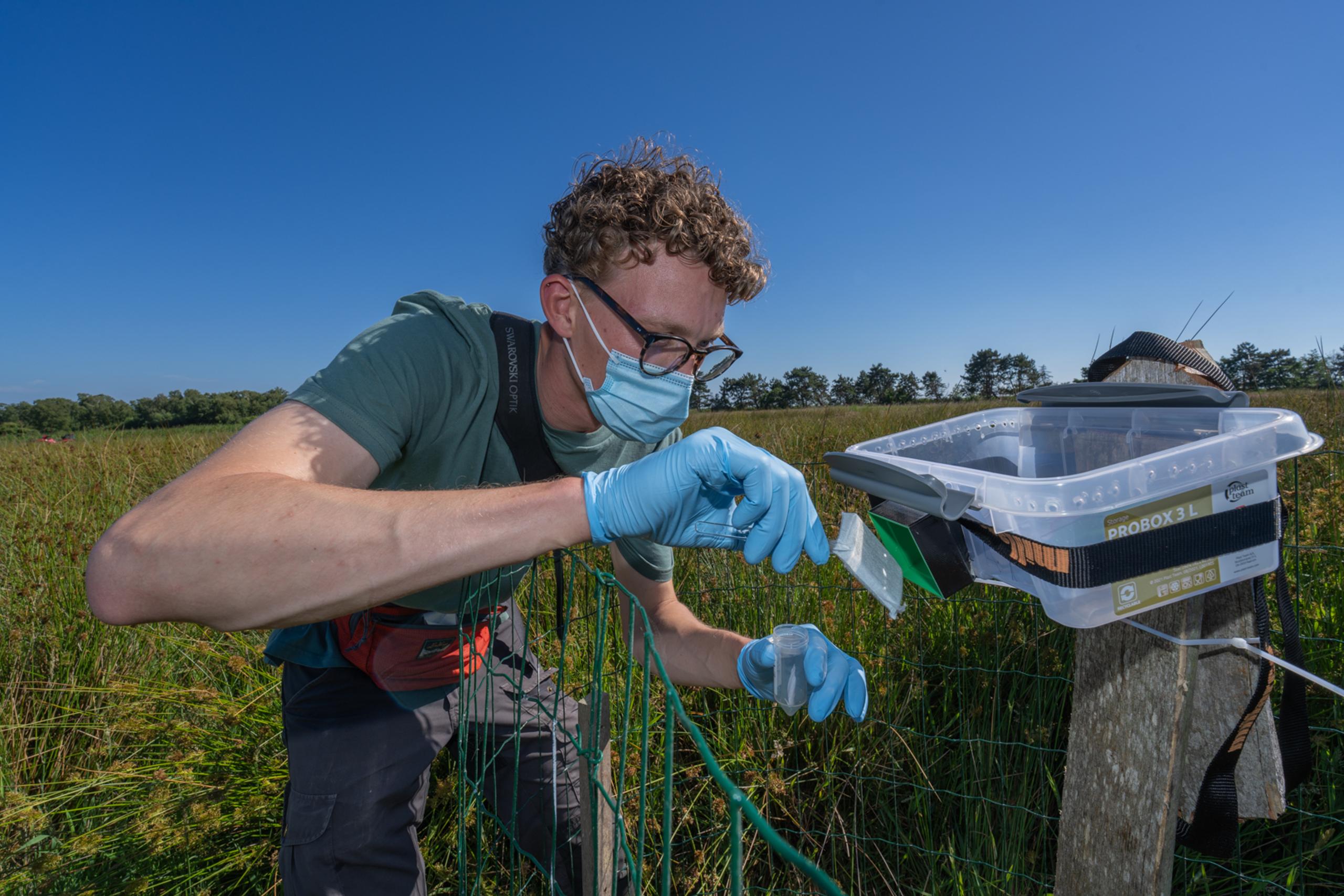
During the summer and autumn of 2024, 25 “vacuums” were placed in Saksfjed Wilderness. They weren’t there to clean, nor did they look like ordinary vacuums. They were designed with a single purpose: to capture DNA floating in the air.
Vacuums with a purpose
The vacuums were installed by Adam Søderdahl, who was a biology student at the time, as part of his thesis project at the University of Copenhagen. Adam’s research primarily aimed to explore how so-called eDNA (environmental DNA) from the air can be used to monitor mammals and birds in the wild.
Now, a year and a half after the study was conducted, Adam has defended his thesis, and the results are ready.
The first evidence from the air
In 2020 researchers Kristine Bohmann and Christina Lynggaard from the Globe Institute at the University of Copenhagen showed for the first time that vertebrate DNA can be detected in the air. They also found that this DNA can be captured and traced back to the species it came from.
Knowing that something works is one thing - understanding how it works is another. This was the core of Adam’s thesis: to determine how accurately an animal’s presence in space and time can be measured using airborne eDNA. Answering such a question requires a laboratory - and this is where Saksfjed Wilderness came into play.
Saksfjed Wilderness as a laboratory
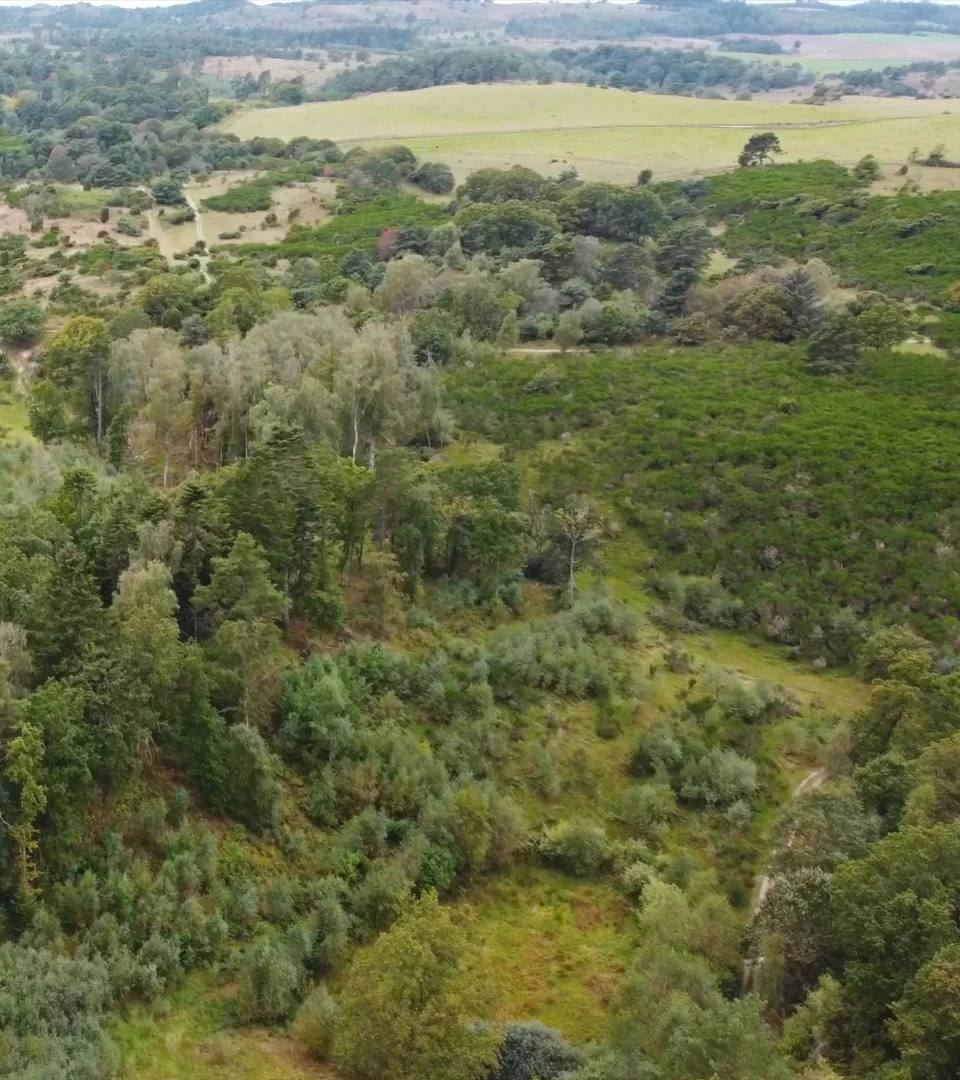
In total, 158 samples were collected in Saksfjed Wilderness, spread over two weeks in two different seasons, across three habitats and 16 hectares. The goal was to better understand how long DNA remains airborne and how far it can travel.
The samples revealed DNA from 79 naturally occurring vertebrate species, including 55 bird species, 22 mammals, one fish, and one amphibian. Even with samples collected over just two weeks, the study managed to detect over a quarter of the bird species observed in Saksfjed Wilderness throughout 2024. For mammals, half of the species were detected.
DNA follows time and space
The results showed that airborne eDNA has a limited range in both time and space. Vacuums placed in the forest primarily captured DNA from woodland birds such as goldcrests, yellowhammers, and leaf warblers, while vacuums in open habitats like grasslands and wetlands mostly picked up DNA from species associated with those environments.
These patterns held even when vacuums were placed close together - the maximum distance between them was only 560 meters. Over time, the method showed the same precision: migratory birds were only detected during the seasons when they were actually present in the area.
The study demonstrates that airborne eDNA provides a fairly precise picture of which species are present, where, and when in the natural environment. This makes the method a promising tool for efficient and accurate wildlife monitoring.
Listen to Adam explain the method behind DNA vacuuming in this video: