19 August 2025
Without large animals, ecosystems don’t function
Interview
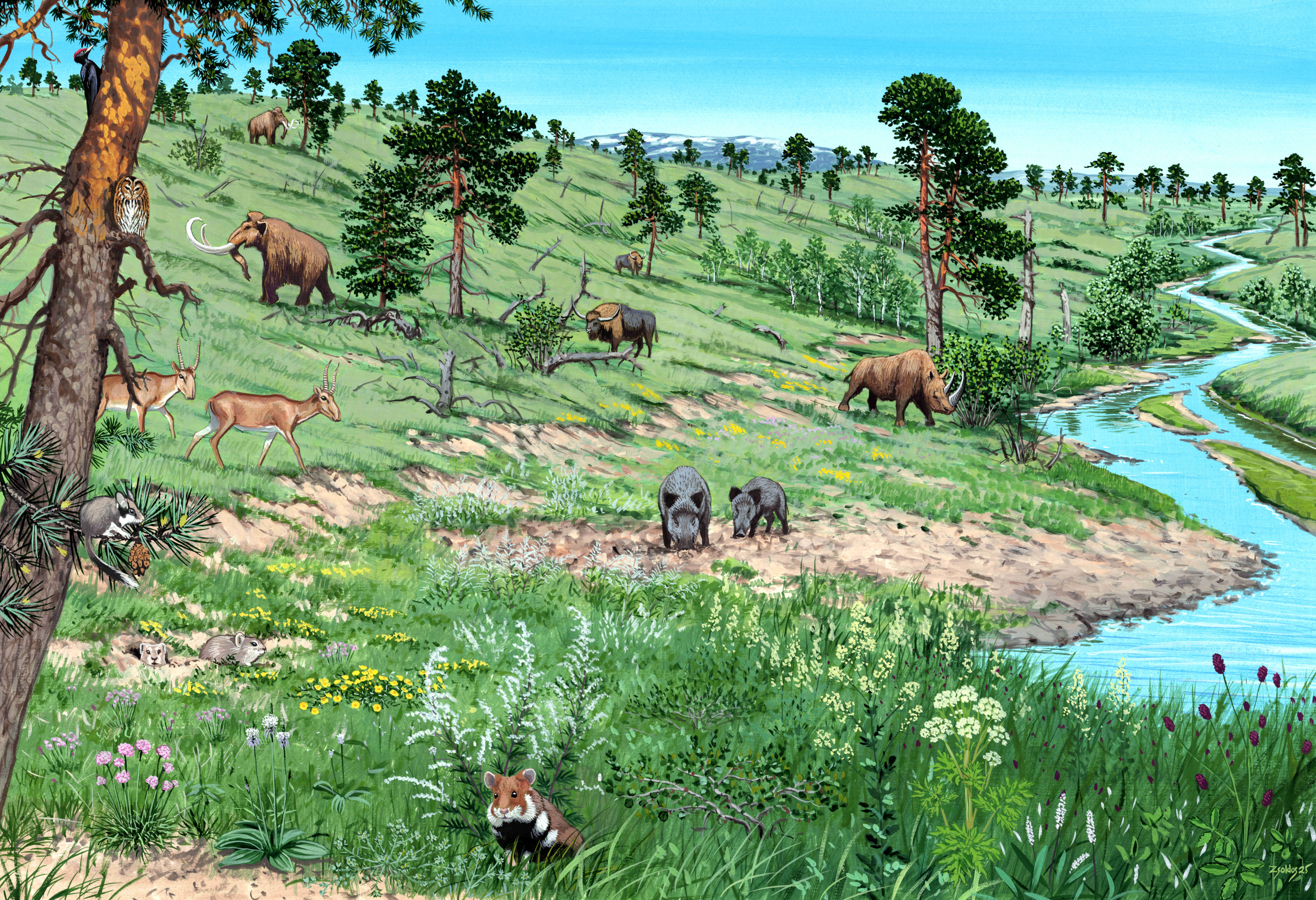
A new, comprehensive research article made by a group of researchers from Biology and Ecoscience at Aarhus University challenges one of the most persistent narratives about European nature. By compiling data from the last 20 million years of ecological development, the researchers present a markedly different picture of what Europe’s landscapes have looked like over evolutionary time.
While the traditional narrative describes Europe as naturally covered by dense, dark forests, the new research suggests that nature for long periods has instead consisted of a dynamic and light-filled mosaic of grasslands, open woodlands, and denser forest patches.
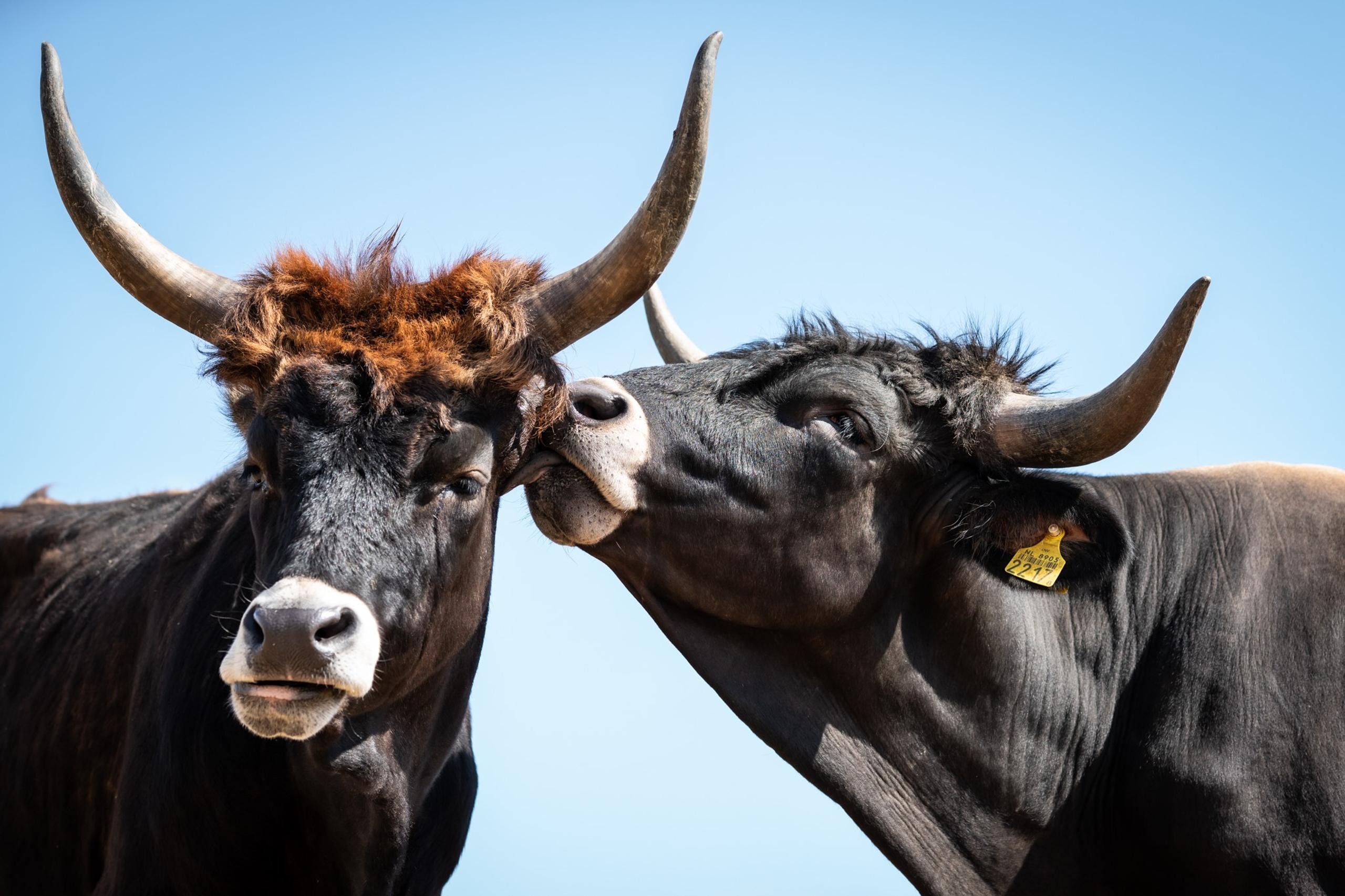
A key finding is the decisive role that large wild herbivores have historically played. Through grazing, trampling, and disturbance, species such as elephants, rhinoceroses, and aurochs helped create and maintain a varied and light-rich landscape.
Using several independent data sources, the researchers find that open forests and semi-open landscapes have been widespread throughout most of the last 23 million years. This indicates that Europe’s natural foundation, from an evolutionary perspective, is closely linked to the presence of large herbivores and the dynamics they create.
The study also challenges a common assumption in the nature debate: that many of the species we today refer to as farmland species only became common with the emergence of agriculture.
The data instead show that several of these species were already widespread in Europe long before farming began. They are therefore not dependent on modern agriculture, but rather on the open mosaic landscapes that were historically maintained by large herbivores.
This insight is important because the misunderstanding may limit new thinking in nature restoration. If these species are viewed as “culture-dependent,” their deep evolutionary roots in natural, grazing-influenced landscapes are overlooked.
The researchers point to a significant shift as humans gradually spread across Europe. Populations of large wild herbivores decline sharply, and at the same time an unprecedented densification of forests is reconstructed.
During the same period, fires become more frequent - likely often caused by humans - while plant diversity declines, even though the climate at times becomes more favorable for forest growth.
Later, with the livestock of the Neolithic farming societies, grazing pressure increases again, and more open forest structures appear to partially return. Nevertheless, according to the researchers, today’s forests appear unusually dense compared with the evolutionary baseline.
The results raise fundamental questions about the way we currently think about nature and biodiversity - also in Denmark.
If Europe’s species have largely evolved in mosaic landscapes shaped by large herbivores, a nature management approach that sharply separates “forest” from “open nature” may miss the evolutionary point of departure.
Denmark generally lacks space for nature - including forest ecosystems. But the research suggests that more space alone may not necessarily be enough. There is also a need for dynamics, variation, and natural disturbances if biodiversity is truly to be strengthened.